Types of software development encompass a vast and ever-evolving landscape. From the intricate logic of backend systems to the sleek aesthetics of user interfaces, the field offers diverse career paths and challenges. This exploration delves into various software development paradigms, application types, and methodologies, providing a comprehensive overview for both beginners and experienced professionals. We’ll examine the key differences between approaches like procedural, object-oriented, and functional programming, and explore the unique demands of developing web, mobile, and desktop applications. Understanding these distinctions is crucial for choosing the right tools and techniques for any given project.
The journey through software development also includes a deep dive into frontend versus backend development, highlighting the collaborative nature of building complete software solutions. We’ll examine popular development methodologies such as Agile, Waterfall, and DevOps, comparing their strengths and weaknesses in different contexts. Finally, we’ll touch upon specialized areas like game development, data science, and AI, showcasing the breadth and depth of this dynamic field.
Software Development Paradigms
Software development paradigms represent fundamental approaches to structuring and organizing code. Choosing the right paradigm significantly impacts a project’s maintainability, scalability, and overall success. Understanding the differences between procedural, object-oriented, and functional programming is crucial for any software developer.
Procedural Programming
Procedural programming focuses on a sequence of instructions or procedures to accomplish a task. Data and functions are largely independent, leading to a linear flow of execution. This approach is often straightforward for smaller projects, but can become complex and difficult to maintain as the project grows. C and early versions of Pascal are prime examples of languages emphasizing procedural programming. A simple example would be a program calculating the area of a rectangle: the program would take inputs (length and width), perform a calculation (multiplication), and output the result. This process is a linear sequence of steps.
Object-Oriented Programming
Object-oriented programming (OOP) organizes code around “objects” that encapsulate data (attributes) and methods (functions) that operate on that data. Key concepts include encapsulation, inheritance, and polymorphism. OOP promotes modularity, reusability, and maintainability, making it suitable for large and complex projects. Java, C++, and Python are popular OOP languages. For instance, designing a “Car” object in Java would involve defining attributes like color, model, and speed, along with methods like accelerate(), brake(), and turn(). The interactions between these objects would form the program’s logic.
Functional Programming
Functional programming treats computation as the evaluation of mathematical functions and avoids changing-state and mutable data. It emphasizes immutability, pure functions (functions that always produce the same output for the same input without side effects), and higher-order functions (functions that take other functions as arguments or return them). This approach leads to more predictable and easier-to-test code. Languages like Haskell, Lisp, and increasingly, features in languages like JavaScript and Python, exemplify functional programming. A functional approach to calculating the factorial of a number would involve recursively applying a function that multiplies a number by its predecessor until it reaches 1. The absence of mutable state simplifies reasoning about the code’s behavior.
Comparison of Paradigms
The following table summarizes the key features, strengths, and weaknesses of each paradigm:
| Paradigm | Language Examples | Strengths | Weaknesses |
|---|---|---|---|
| Procedural | C, Pascal | Simple, easy to learn for smaller projects, efficient in some cases | Difficult to maintain for large projects, less modular, prone to errors in large codebases |
| Object-Oriented | Java, C++, Python | Modularity, reusability, maintainability, suitable for large projects | Can be more complex to learn, potentially less efficient than procedural approaches in some scenarios |
| Functional | Haskell, Lisp, Clojure | Predictable, easier to test, highly concurrent, often more concise | Steeper learning curve for many programmers, not always the most efficient for all tasks |
Types of Software Applications
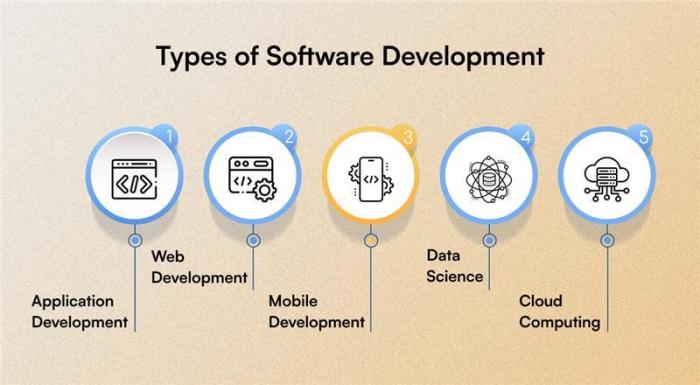
Source: orangemantra.com
The world of software development encompasses a wide range of specializations, from mobile app development to complex enterprise systems. When tackling intricate projects demanding high accuracy and efficiency, however, consider seeking expertise in precise software solutions to ensure the final product meets stringent requirements. This focus on precision then informs the methodologies and technologies chosen within the broader context of software development types.
Software applications are ubiquitous, permeating nearly every aspect of modern life. Understanding the different types of applications and their unique development challenges is crucial for software engineers and anyone involved in the software development lifecycle. This section categorizes various software applications, highlighting their characteristics, development considerations, and illustrative examples.
Web Applications
Web applications are software programs accessed through a web browser over the internet. Their development requires expertise in front-end technologies (HTML, CSS, JavaScript), back-end technologies (server-side languages like Python, Java, Node.js), and databases. Scalability and security are paramount considerations due to the distributed nature of the application and the potential for large numbers of concurrent users. Examples include online banking systems (e.g., Chase Online), social media platforms (e.g., Facebook), and e-commerce websites (e.g., Amazon). These applications share functionalities like user authentication, data management, and interactive user interfaces, tailored to the specific needs of their target audience (e.g., banking customers, social media users, online shoppers).
Mobile Applications
Mobile applications, or apps, are designed for smartphones and tablets, utilizing platform-specific development frameworks like iOS (Swift, Objective-C) or Android (Kotlin, Java). Key considerations include user experience (UX) optimization for smaller screens, battery life management, and responsiveness across different devices and screen sizes. Popular examples include messaging apps (e.g., WhatsApp), ride-sharing services (e.g., Uber), and gaming apps (e.g., Candy Crush Saga). These applications prioritize intuitive interfaces and functionalities relevant to mobile users, such as location services and push notifications.
Desktop Applications
Desktop applications are software programs installed and run directly on a user’s computer. They typically offer more powerful functionalities and access to system resources compared to web or mobile applications. Development involves choosing appropriate programming languages (e.g., C++, C#, Java) and frameworks, with considerations for cross-platform compatibility and efficient resource management. Examples include word processors (e.g., Microsoft Word), image editing software (e.g., Adobe Photoshop), and video editing software (e.g., Adobe Premiere Pro). These applications cater to users requiring advanced features and functionalities typically not feasible on mobile or web platforms.
Embedded Systems
Embedded systems are software applications integrated into hardware devices to perform specific tasks. They are often resource-constrained, requiring efficient code and careful memory management. Development frequently involves low-level programming languages like C and assembly language, with a strong emphasis on real-time performance and reliability. Examples include software controlling automotive systems (e.g., anti-lock braking systems), medical devices (e.g., pacemakers), and industrial control systems (e.g., robotic arms). These applications are typically designed for a very specific purpose within a dedicated hardware environment, often with high safety and reliability requirements.
Frontend vs. Backend Development: Types Of Software Development
Frontend and backend development represent two distinct but interconnected aspects of software creation. Understanding their differences is crucial for anyone involved in the software development lifecycle, whether as a developer, project manager, or client. While both contribute to a functional and appealing application, their focuses and methodologies differ significantly.
Frontend Development Responsibilities and Technologies
Frontend development centers on creating the user interface (UI) and user experience (UX) of a software application. This is the part of the application that users directly interact with – what they see and how they interact with it. The goal is to build an intuitive, visually appealing, and responsive interface that facilitates seamless user interaction. This involves translating designs and wireframes into functional code, ensuring responsiveness across various devices, and optimizing for performance and accessibility.
Frontend technologies are constantly evolving, but several remain consistently popular and widely used. The choice of technology often depends on project requirements and developer preferences.
- HTML (HyperText Markup Language): Forms the structural foundation of web pages, defining the content and its organization.
- CSS (Cascading Style Sheets): Styles the visual presentation of HTML elements, controlling layout, colors, fonts, and responsiveness.
- JavaScript: Adds interactivity and dynamic behavior to web pages, enabling features like animations, user input handling, and asynchronous data fetching.
- JavaScript Frameworks/Libraries: React, Angular, and Vue.js are popular frameworks that provide structured approaches to building complex user interfaces. They offer features like component-based architecture, state management, and routing.
- Testing Frameworks: Jest, Mocha, and Cypress are examples of frameworks used for testing the functionality and user experience of the frontend code.
Backend Development Responsibilities and Technologies
Backend development focuses on the server-side logic, databases, and APIs that power a software application. This is the unseen engine that drives the functionality and data management of the application. Backend developers handle data storage, retrieval, processing, and security, ensuring the application functions correctly and efficiently. This includes building APIs (Application Programming Interfaces) that allow the frontend to communicate with the backend and access necessary data.
Backend technologies are equally diverse, with choices depending on factors like scalability needs, data volume, and security requirements.
- Server-Side Languages: Python, Java, Node.js (JavaScript), PHP, Ruby, and Go are commonly used languages for building the server-side logic of applications.
- Databases: MySQL, PostgreSQL, MongoDB, and others are used for storing and managing application data. The choice depends on the type of data and application requirements (e.g., relational vs. NoSQL databases).
- API Frameworks: Frameworks like Express.js (Node.js), Django (Python), and Spring Boot (Java) simplify the process of building and managing APIs.
- Cloud Platforms: AWS, Google Cloud Platform (GCP), and Microsoft Azure provide infrastructure and services for deploying and managing backend applications.
- Server Technologies: Apache, Nginx are commonly used web servers to handle incoming requests and serve the application.
Frontend vs. Backend Developer Roles in a Software Project
In a typical software project, frontend and backend developers work collaboratively, but their roles are distinct. Frontend developers are responsible for the user interface and user experience, ensuring the application is visually appealing and easy to use. They focus on building responsive and interactive elements that provide a seamless user journey. Backend developers, on the other hand, concentrate on the server-side logic, databases, and APIs. They handle data management, security, and ensuring the application’s core functionality works correctly. Effective communication and collaboration between these two roles are essential for successful software development. A clear division of responsibilities, combined with efficient communication channels, allows for parallel development and faster project completion. For example, while the backend team focuses on building and testing the API, the frontend team can simultaneously work on mockups and initial UI components, using placeholder data until the API is ready. This parallel approach optimizes development time and resources.
Software Development Methodologies
Software development methodologies are crucial for managing the complexities of software projects. Choosing the right methodology significantly impacts project success, influencing factors like team collaboration, risk mitigation, and overall efficiency. Different methodologies cater to different project types and organizational structures. We will examine three prominent methodologies: Agile, Waterfall, and DevOps.
Agile Methodology
Agile is an iterative and incremental approach emphasizing flexibility and collaboration. Projects are broken down into short cycles called sprints (typically 1-4 weeks), allowing for frequent adaptation based on feedback and changing requirements. Each sprint results in a working increment of the software. This iterative nature minimizes risk by allowing for early detection and correction of issues.
Agile methodologies prioritize close collaboration between developers, testers, and stakeholders. Daily stand-up meetings, sprint reviews, and retrospectives foster open communication and continuous improvement. Examples of Agile frameworks include Scrum and Kanban. A real-world application might be a mobile app development project where user feedback is crucial for success. The development team could use Scrum, with each sprint focusing on delivering a specific set of features based on user stories and prioritized by the product owner.
Waterfall Methodology
Waterfall is a linear and sequential approach where each phase must be completed before the next begins. This structured approach is well-suited for projects with clearly defined requirements and minimal anticipated changes. Phases typically include requirements gathering, design, implementation, testing, deployment, and maintenance. The sequential nature makes it easier to manage and track progress, but it can be less adaptable to changing requirements.
Waterfall’s rigidity can be a drawback in projects where requirements are likely to evolve. A real-world example could be developing embedded software for a medical device where strict regulatory requirements and a highly structured process are necessary. Changes are less likely, and a thorough, upfront planning phase is essential to ensure compliance and safety.
DevOps Methodology
DevOps emphasizes collaboration and communication between development and operations teams to automate and streamline the software delivery process. It aims to shorten the software development lifecycle and improve the frequency and quality of releases. DevOps leverages automation tools and techniques, such as continuous integration and continuous delivery (CI/CD), to build, test, and deploy software rapidly and reliably.
DevOps is often used in projects requiring frequent updates and deployments, such as web applications and cloud-based services. For example, a large e-commerce platform might utilize DevOps to ensure quick deployment of new features and bug fixes, responding rapidly to market demands and customer feedback. The automation involved minimizes manual intervention and reduces the risk of human error.
Comparison of Methodologies
The following table summarizes the key differences between Agile, Waterfall, and DevOps methodologies:
| Methodology | Project Phases | Team Collaboration | Risk Management |
|---|---|---|---|
| Agile | Iterative and incremental sprints | High, frequent communication and collaboration | Continuous feedback and adaptation; early detection of issues |
| Waterfall | Sequential and linear phases | Defined roles and responsibilities; less frequent communication | Risk assessment upfront; less adaptability to change |
| DevOps | Continuous integration and delivery | Close collaboration between development and operations | Automation and monitoring; rapid detection and resolution of issues |
Specialized Areas of Software Development
Source: bloggerborneo.com
Software development is a vast field, encompassing many specialized areas requiring unique skill sets and technological expertise. While general programming principles apply across the board, certain niches demand a deeper understanding of specific tools, languages, and methodologies. This section explores several key specialized areas within software development.
Each specialized area presents distinct challenges and opportunities. The choice of specialization often depends on individual interests and career goals. Understanding the differences between these areas is crucial for anyone considering a career in software development.
Game Development
Game development focuses on creating interactive entertainment experiences. This involves designing game mechanics, developing compelling narratives, and implementing visually appealing graphics. The process requires expertise in several areas, including programming, 3D modeling, animation, sound design, and game engine utilization. Popular game engines such as Unity and Unreal Engine provide frameworks and tools to streamline development. Programming languages commonly used include C++, C#, and Lua. Testing in game development involves extensive playtesting, bug fixing, and performance optimization. Key skills include proficiency in relevant programming languages, experience with game engines, understanding of game design principles, and strong problem-solving abilities.
Data Science
Data science involves extracting knowledge and insights from structured and unstructured data. This field combines programming, statistics, and domain expertise to analyze large datasets, build predictive models, and develop data-driven solutions. Common tools include Python libraries like Pandas, NumPy, and Scikit-learn, as well as R and specialized data visualization tools such as Tableau and Power BI. Key skills include statistical modeling, data mining, machine learning algorithms, and data visualization techniques. Testing in data science involves rigorous validation of models and algorithms, ensuring accuracy and reliability of predictions.
AI Development
Artificial intelligence (AI) development focuses on creating intelligent systems capable of performing tasks that typically require human intelligence. This involves developing algorithms for machine learning, natural language processing, computer vision, and robotics. Programming languages such as Python and Java are widely used, along with specialized AI frameworks like TensorFlow and PyTorch. Key skills include a strong understanding of machine learning algorithms, deep learning techniques, and experience with AI frameworks. Testing in AI development involves evaluating model performance, ensuring fairness and bias mitigation, and verifying the robustness of the system.
Mobile App Development
Mobile app development centers on creating applications for smartphones and tablets. This involves designing user interfaces, developing application logic, and integrating with various mobile platforms (iOS and Android). Programming languages like Swift (iOS) and Kotlin/Java (Android) are commonly used, along with cross-platform frameworks such as React Native and Flutter. Key skills include user interface/user experience (UI/UX) design, knowledge of mobile development platforms, and experience with mobile development frameworks. Testing in mobile app development involves thorough testing across different devices, operating systems, and screen sizes to ensure compatibility and functionality.
| Aspect | Game Development | Data Science | Mobile App Development |
|---|---|---|---|
| Tools | Unity, Unreal Engine, Blender | Python (Pandas, NumPy, Scikit-learn), R, Tableau, Power BI | Android Studio, Xcode, React Native, Flutter |
| Programming Languages | C++, C#, Lua | Python, R | Swift, Kotlin, Java, JavaScript |
| Testing Methods | Playtesting, performance testing, bug fixing | Model validation, accuracy testing, bias detection | Unit testing, integration testing, UI testing, device compatibility testing |
Software Development Lifecycle (SDLC) Phases
The Software Development Lifecycle (SDLC) is a structured process used to plan, design, develop, test, deploy, and maintain software applications. Understanding the phases of the SDLC is crucial for successful software project management and delivery. Each phase plays a vital role in ensuring the final product meets requirements and is delivered efficiently.
The SDLC typically comprises six key phases, each with specific activities and deliverables. These phases are iterative and often overlap, but a clear understanding of their individual functions is essential for effective project management.
Planning Phase
The planning phase sets the foundation for the entire project. This phase involves defining project goals, identifying target users, outlining the scope of the project, and establishing a realistic timeline and budget. Key deliverables include a project charter, a requirements document (often specifying functional and non-functional requirements), and a preliminary project schedule. A well-defined plan minimizes risks and ensures everyone involved is working towards a common goal.
Design Phase
The design phase translates the requirements Artikeld in the planning phase into a detailed blueprint for the software. This involves creating system architecture diagrams, database designs, user interface mockups, and detailed specifications for each component of the software. The deliverables from this phase include technical design documents, data models, and UI prototypes. This phase ensures the software will meet the specified requirements and function as intended.
Implementation Phase
This phase focuses on the actual coding and development of the software. Developers write the code based on the design specifications created in the previous phase. This often involves using various programming languages, frameworks, and tools. The primary deliverable of this phase is the functional software code, ready for testing. Regular code reviews and version control are essential practices during implementation.
Testing Phase, Types of software development
Thorough testing is crucial to ensure the software functions correctly and meets quality standards. This phase involves various testing methods, including unit testing (testing individual components), integration testing (testing interactions between components), system testing (testing the entire system), and user acceptance testing (UAT, testing by end-users). Bug reports and test results are key deliverables of this phase. The goal is to identify and fix any defects before deployment.
Deployment Phase
Once testing is complete and the software is deemed ready for release, the deployment phase involves releasing the software to the end-users. This may involve installing the software on servers, configuring network settings, and providing user training. The successful deployment of the software to the intended environment is the primary deliverable. This phase requires careful planning to minimize disruptions and ensure a smooth transition.
Maintenance Phase
Even after deployment, the software requires ongoing maintenance. This includes fixing bugs, adding new features, improving performance, and addressing security vulnerabilities. This phase ensures the software continues to function effectively and meets evolving user needs. Regular updates, bug fixes, and performance monitoring are ongoing activities in this phase.
SDLC Flowchart
The following describes a flowchart illustrating the SDLC phases and their relationships:
[Imagine a flowchart here. The flowchart would begin with a “Start” oval, followed by a rectangle representing the Planning phase, connected to a rectangle representing the Design phase, then Implementation, Testing, Deployment, and finally Maintenance. Arrows would connect each phase, indicating the sequential flow. A “End” oval would conclude the flowchart. Each rectangle would be labeled with its corresponding phase name. The arrows would indicate a potential feedback loop from testing back to design or implementation, highlighting iterative nature of the process.]
Each phase in the flowchart feeds into the next, creating a continuous cycle. The feedback loop between Testing and earlier phases (Design or Implementation) illustrates the iterative nature of the SDLC, allowing for adjustments based on testing results. The final “End” oval represents the completion of a specific software release, although the maintenance phase continues indefinitely.
End of Discussion

Source: medium.com
In conclusion, the world of software development is a rich tapestry woven from diverse paradigms, methodologies, and specialized areas. Understanding the nuances of each approach is crucial for success in this ever-evolving field. Whether you’re a seasoned developer seeking to expand your expertise or a newcomer exploring potential career paths, the knowledge gained from this exploration provides a strong foundation for navigating the complexities and opportunities within the software development landscape. The key takeaway is the importance of adaptability and a continuous learning approach to stay relevant in this rapidly changing industry.