Parler app store free speech censorship: The saga of Parler’s ban from the Apple App Store and Google Play ignited a firestorm of debate. Was it a necessary step to curb the spread of misinformation and violence, or a blatant attack on free speech? This isn’t just a tech story; it’s a clash between platform responsibility and the right to express, however controversial, opinions. We delve into the messy details, exploring the arguments, the fallout, and what it all means for the future of online discourse.
From the initial removal, the ensuing legal battles, and the rise of alternative platforms, the Parler case raises crucial questions about the role of tech giants in policing online content. We’ll examine the different perspectives, the complexities of content moderation, and the potential implications for free speech in the digital age. Get ready to unpack this controversial episode and its lasting impact.
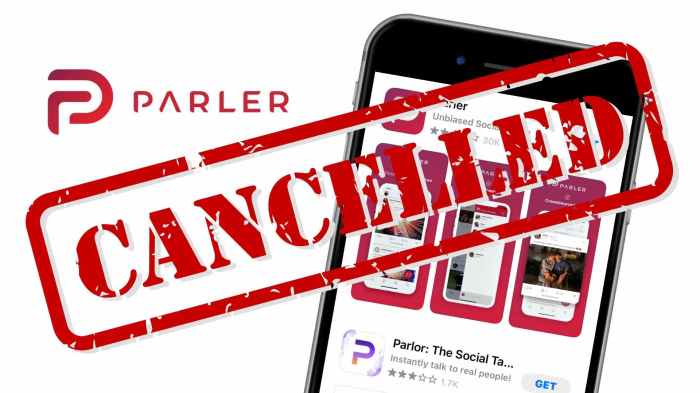
Parler’s App Store Removal
The swift removal of Parler, a social media platform marketed as a haven for free speech, from both the Apple App Store and Google Play Store in early 2021 sent shockwaves through the tech world and sparked a heated debate about the power of app stores and the limits of free speech online. This wasn’t a gradual fade-out; it was a dramatic expulsion, highlighting the complex relationship between platform neutrality, content moderation, and the potential for social media to be used to incite violence.
Parler’s removal wasn’t an isolated incident; it occurred in the immediate aftermath of the January 6th, 2021 attack on the United States Capitol. The platform had become a breeding ground for extremist rhetoric and conspiracy theories, with many users openly planning and celebrating the events leading up to and during the insurrection. This created a situation where major app stores felt compelled to act, fearing legal repercussions and reputational damage associated with hosting a platform that appeared to facilitate illegal activity.
The Circumstances Surrounding Parler’s Removal
Parler’s removal stemmed from a confluence of factors. The most significant was the surge in violent and incendiary content posted on the platform in the days leading up to and following the January 6th attack. Apple and Google cited a failure by Parler to adequately moderate this content as the primary reason for their decision. They argued that the platform’s lax content moderation policies created a dangerous environment, allowing for the spread of misinformation and incitement to violence. This wasn’t simply a matter of differing opinions; it was a concern that Parler was actively facilitating illegal acts and potentially endangering public safety. The companies pointed to numerous posts calling for violence, spreading false information about the election, and organizing the attack on the Capitol as evidence of this failure.
Timeline of Events
The timeline leading to Parler’s removal unfolded rapidly. The immediate aftermath of the January 6th attack saw increased scrutiny of social media platforms. Parler, already under observation for its relatively hands-off approach to content moderation, faced intense pressure. Within days, both Apple and Google removed the app from their respective app stores, citing violations of their terms of service. Amazon Web Services (AWS), Parler’s hosting provider, subsequently terminated its contract with the company, effectively shutting down Parler’s service entirely. The platform remained offline for several weeks before finding a new hosting provider.
Key Players and Their Roles
The decision to remove Parler involved several key players. The following table summarizes their roles and, where available, their public statements:
| Name | Role | Organization | Statement (if available) |
|---|---|---|---|
| Tim Cook | CEO | Apple | Apple’s statement emphasized the need to maintain a safe app store environment, citing Parler’s failure to moderate violent content. |
| Sundar Pichai | CEO | Google’s statement echoed Apple’s concerns, highlighting the danger posed by incitement to violence and the spread of misinformation. | |
| Andy Jassy | CEO | Amazon Web Services (AWS) | AWS cited Parler’s failure to adequately address the spread of violent content as the reason for terminating their contract. |
| John Matze | CEO | Parler | Matze publicly criticized Apple and Google’s actions, arguing that they were engaging in censorship. He also acknowledged the challenges of content moderation at scale. |
Free Speech Arguments For and Against Parler
Parler’s tumultuous journey, marked by its removal from major app stores and accusations of facilitating the spread of misinformation, ignited a fierce debate surrounding free speech and its limitations on online platforms. The core question revolves around balancing the right to express oneself freely with the responsibility to prevent harm and the spread of falsehoods. This examination delves into the arguments both for and against Parler’s existence as a platform dedicated to relatively unfettered free speech.
Parler’s proponents argue that the platform serves as a crucial space for voices often marginalized on other social media sites. They contend that the censorship practiced by larger platforms stifles free expression and creates an echo chamber, limiting the diversity of opinions and perspectives available to users. The argument centers on the belief that all speech, even that deemed offensive or controversial by some, should be protected unless it incites direct violence or poses an immediate threat. This perspective emphasizes the importance of open dialogue, even if uncomfortable, as essential for a healthy democracy.
Arguments Supporting Parler’s Existence, Parler app store free speech censorship
The principle of free speech, enshrined in many constitutions and legal frameworks, underpins the arguments supporting Parler. This principle is often interpreted to mean the government cannot restrict speech, but the application of this principle to private platforms like Parler is complex. Supporters argue that while platforms have the right to set their own terms of service, excessive content moderation constitutes a form of censorship that undermines the free exchange of ideas. They point to instances where users have been banned or deplatformed from other platforms for expressing views deemed controversial or unpopular, suggesting a chilling effect on open discourse. Furthermore, they argue that Parler provides a haven for individuals and groups who feel silenced on other platforms, fostering a sense of community and belonging.
Arguments Against Parler’s Unmoderated Approach
Counterarguments emphasize the potential harms associated with a platform that lacks robust content moderation. Critics point to the spread of misinformation, conspiracy theories, and hate speech on Parler, arguing that such content can incite violence, radicalize individuals, and undermine public trust in institutions. The events surrounding the January 6th, 2021 attack on the US Capitol, where Parler was identified as a platform used to organize and coordinate the event, are often cited as a prime example of the dangers of unchecked online speech. The argument here isn’t about suppressing all dissenting opinions, but about preventing the dissemination of demonstrably false information that poses a clear and present danger to public safety and democratic processes.
Comparison of Content Moderation Policies
Parler’s content moderation policies, or rather, the lack thereof compared to other platforms, is a key point of contention. While platforms like Facebook and Twitter have implemented increasingly sophisticated content moderation systems, often relying on algorithms and human moderators, Parler initially adopted a significantly more hands-off approach. This difference in approach is not merely a matter of technical capability; it reflects fundamentally different philosophies regarding the role of online platforms in regulating speech. The comparison highlights the trade-offs between freedom of expression and the responsibility to mitigate harm, illustrating the complexities inherent in balancing these competing values. While Facebook and Twitter actively remove content deemed to violate their community standards, Parler’s previous approach prioritized user freedom, resulting in a platform that attracted users seeking to bypass the content moderation policies of more established social media sites. This comparison reveals the wide spectrum of approaches to content moderation and the ongoing debate surrounding the optimal balance between free speech and safety.
Censorship and its Impact on Parler Users: Parler App Store Free Speech Censorship
Parler’s rapid rise and equally swift fall from grace serve as a stark example of the complexities surrounding free speech online and the power wielded by app stores. The removal of Parler from major platforms sparked intense debate, highlighting the tension between protecting free expression and mitigating the spread of harmful content. Understanding the types of content removed, the user experience in the aftermath, and the legal battles that ensued is crucial to grasping the full impact of this controversial episode.
Parler’s content moderation policies, or rather, the lack thereof, were central to its downfall. While initially marketed as a platform for unfettered free speech, the reality was far more nuanced. The absence of robust content moderation mechanisms allowed for the proliferation of posts containing hate speech, conspiracy theories, and calls to violence, particularly in the lead-up to and aftermath of the January 6th, 2021, attack on the US Capitol.
Types of Content Removed and Rationale
The content removed from Parler largely consisted of posts deemed to violate the terms of service of app stores like Apple and Google, as well as those that violated existing laws. This included posts inciting violence, promoting hate speech targeting protected groups, and spreading misinformation that could lead to real-world harm. The rationale behind these removals was primarily focused on preventing the platform from being used to organize or incite illegal activities and to protect users from exposure to harmful content. The platforms argued that hosting such content violated their own community guidelines and potentially exposed them to legal liability. While some argued that this constituted censorship, the app stores maintained they were simply enforcing their own rules and complying with legal obligations.
Experiences of Parler Users Following App Store Removals
The removal of Parler from major app stores significantly impacted its users. Many experienced frustration and a sense of being silenced, feeling that their voices were being suppressed. Others, however, acknowledged the presence of harmful content on the platform and accepted the removals as a necessary step to curb the spread of misinformation and violence.
- Loss of Community: Many users relied on Parler for its perceived freedom of expression and built online communities around shared beliefs. The removal of the app disrupted these communities, leaving users scrambling to find alternative platforms.
- Difficulty Accessing Information: Some users found it challenging to access information and engage in discussions on alternative platforms, highlighting the potential for digital divides and the concentration of power in the hands of a few major tech companies.
- Concerns about Censorship: Many users felt that their free speech rights were being violated, leading to widespread anger and accusations of censorship against Apple, Google, and Amazon.
- Migration to Alternative Platforms: Following the removal, many Parler users migrated to alternative platforms, often smaller and less moderated, which potentially exacerbated the spread of misinformation and extremism.
Legal Challenges Faced by Parler
Parler faced significant legal challenges following its removal from app stores. The company filed lawsuits against Amazon Web Services (AWS), Apple, and Google, alleging anti-competitive behavior and violations of free speech rights. These lawsuits highlighted the ongoing legal battle surrounding content moderation, free speech, and the power of tech companies to control online discourse. The outcome of these legal battles will have significant implications for the future of online platforms and content moderation policies. The cases involved complex legal arguments concerning Section 230 of the Communications Decency Act, which shields online platforms from liability for user-generated content. Parler argued that the removal violated this protection, while the app stores countered that they were justified in removing the app due to violations of their terms of service and the potential for harm.
The Role of Tech Companies in Content Moderation
Source: techspot.com
The Parler app store saga highlighted the tricky dance between free speech and platform responsibility. It’s a debate mirrored, in a way, by the creative freedoms and community guidelines wrestled with by indie game developers like those behind the wildly popular Among Us, as explored in this insightful article on outersloth innersloth among us indie games survival.
Ultimately, the question remains: where do we draw the line, and how do we balance individual expression with the potential for misuse?
The removal of Parler from app stores sparked a heated debate about the responsibilities of tech companies in regulating the content hosted on their platforms. This isn’t just about free speech; it’s about balancing the desire for open dialogue with the need to prevent the spread of harmful content, like hate speech, incitement to violence, and misinformation. The power wielded by these tech giants demands a careful examination of their policies and practices.
The responsibility of app stores extends beyond simply providing a platform. They act as gatekeepers, deciding which apps are allowed on their digital shelves and, by extension, influencing what content users can access. This gatekeeping role carries significant ethical and societal implications, raising questions about censorship, bias, and the potential for monopolistic control over information flow. The lines between content moderation and censorship are often blurred, leading to ongoing legal and philosophical debates.
App Store Content Moderation Policies and Enforcement
Apple, Google, and Amazon, the dominant players in the app store ecosystem, each employ distinct approaches to content moderation. Their policies vary in scope and stringency, leading to differing outcomes and attracting criticism from various angles. Understanding these differences is crucial to grasping the complexities of this issue.
| Company | Policy | Enforcement Method | Criticism |
|---|---|---|---|
| Apple | Strict guidelines prohibiting hate speech, violence, and illegal content. Emphasis on user privacy and data security. | Proactive review process for app submissions and reactive removal of apps violating guidelines. Appeals process available. | Accused of inconsistent application of guidelines, favoring certain apps over others. Concerns about lack of transparency in decision-making. Criticism for being overly restrictive in some cases. |
| Similar to Apple, with a focus on prohibiting harmful content. Policy is extensive, covering various categories of inappropriate content. | Automated systems combined with human review for app submissions and ongoing monitoring. Apps can be removed with warnings and opportunities for remediation. | Concerns about the effectiveness of automated systems, leading to both false positives and false negatives. Criticisms about bias in algorithms and human review processes. Transparency issues similar to Apple. | |
| Amazon | Policies generally align with Apple and Google, focusing on preventing illegal and harmful content. However, enforcement may vary depending on the platform (e.g., Amazon Appstore vs. AWS). | Enforcement methods vary depending on the platform. Generally involves app removal and developer account suspension for violations. | Criticism for less stringent enforcement compared to Apple and Google, particularly regarding third-party app stores. Concerns about potential for abuse due to less transparent review processes. |
Examples of Apps Removed from App Stores
Numerous apps have been removed from app stores for violating content policies. These removals highlight the challenges and complexities inherent in content moderation. For instance, several social media apps have faced removal for spreading misinformation related to elections or public health crises. Dating apps have been removed for facilitating illegal activities or promoting harmful content. Game apps have also been targeted for containing inappropriate content or violating intellectual property rights. These examples illustrate the wide range of content issues that app stores must address and the potential consequences of failing to do so effectively. The criteria for removal often remain opaque, leading to accusations of arbitrary enforcement and biased decision-making.
Alternative Platforms and the Future of Free Speech Online
Source: agencypartner.com
Parler’s removal from major app stores sparked a significant debate about free speech online and the power of tech companies. This event also fueled the rise of alternative platforms, each attempting to carve out a space for users seeking less moderated online environments. These platforms offer varying approaches to content moderation, raising complex questions about the balance between free expression and the prevention of harmful content.
The exodus from Parler led to a surge in users seeking similar platforms, highlighting the demand for spaces perceived as less restrictive in terms of content moderation policies. Understanding these alternatives is crucial to comprehending the evolving landscape of online discourse and the future of free speech in the digital age.
Alternative Platforms that Emerged After Parler’s Removal
Several platforms emerged as potential replacements for Parler, each with its own approach to content moderation and user base. These platforms cater to different segments of the population seeking alternative spaces for communication and information sharing. Some prioritized minimal moderation, while others implemented different strategies to balance free speech with community safety. Examples include Gettr, Rumble, and Gab, each attracting users with varying degrees of tolerance for unmoderated content.
How Alternative Platforms Address Free Speech and Content Moderation
Gettr, for instance, positioned itself as a platform championing free speech, initially adopting a hands-off approach to content moderation. However, it later implemented some content moderation policies to address illegal activity and harmful content, highlighting the challenges of maintaining a truly unmoderated space. Rumble, while focusing on video content, also emphasizes free speech but has introduced measures to prevent the spread of misinformation and harmful content. Gab, known for its relatively permissive content moderation policies, has faced criticism for hosting extremist content, illustrating the complexities of balancing free speech with the responsibility of preventing harm.
Visual Comparison of Parler and its Alternatives
Imagine a bar graph. The horizontal axis represents platforms: Parler, Gettr, Rumble, and Gab. The vertical axis represents user base size (in millions). Parler’s bar would be relatively tall, reflecting its initial user base before removal. Gettr’s bar would be shorter but still substantial, showing a significant portion of Parler’s users migrated there. Rumble’s bar would be of moderate height, indicating a smaller but dedicated user base. Gab’s bar would be the shortest, reflecting its smaller and more niche user base.
Now, imagine a separate table. The rows represent the platforms (Parler, Gettr, Rumble, Gab). The columns represent features: Content Moderation (Strict, Moderate, Lenient), User Base Demographics (primarily conservative, mixed, other), Focus (general social media, video sharing, etc.). Each cell would contain a brief description reflecting the platform’s characteristics. For example, Parler’s Content Moderation would be “Lenient,” its User Base Demographics “Primarily Conservative,” and its Focus “General Social Media.” The other platforms would be similarly categorized, showing the differences in their approach to content moderation and target audience. This visual comparison would clearly illustrate the distinctions between Parler and its alternatives in terms of user base size, features, and content moderation strategies.
The Broader Implications of the Parler Case
Source: digitalmomblog.com
The Parler app’s removal from app stores, fueled by concerns over its role in the January 6th Capitol riot, sent shockwaves through the tech world and ignited a fierce debate about online content moderation. The case isn’t just about one app; it’s a pivotal moment highlighting the complex interplay between free speech, platform responsibility, and the power wielded by tech giants. Its implications extend far beyond Parler itself, shaping the future of online discourse and the very nature of digital spaces.
The Parler case significantly impacts the future of online content moderation by forcing a reconsideration of the balance between free expression and the prevention of harmful content. The swift action taken by Apple and Google set a precedent, suggesting a potential trend towards stricter enforcement of community guidelines and a lower tolerance for content deemed to incite violence or spread misinformation. This, in turn, could lead to a more proactive approach to content moderation across various platforms, potentially limiting the reach of controversial viewpoints. The question of who decides what constitutes “harmful” remains a critical point of contention.
Impact on Freedom of Speech and Expression
The Parler situation raises critical questions about the boundaries of free speech in the digital realm. While the First Amendment protects against government censorship, it doesn’t extend to private companies. This distinction becomes crucial when considering the role of tech platforms, which function as both publishers and distributors of information. The removal of Parler, while not a direct act of government censorship, arguably limits the ability of certain groups to express their views, raising concerns about potential chilling effects on free speech. The debate centers on whether private companies should have the power to effectively censor speech, even if their actions aren’t legally mandated. The argument against platform censorship often focuses on the potential for bias and the suppression of dissenting opinions. Conversely, proponents of stricter content moderation emphasize the responsibility of platforms to protect their users from harm, including the spread of misinformation and incitement to violence.
Similar Cases Involving Social Media Platforms and Content Moderation
Numerous instances parallel the Parler case, demonstrating the ongoing struggle to balance free speech and content moderation. For example, the deplatforming of individuals like Alex Jones from various social media platforms highlights the challenges involved in determining what constitutes hate speech or misinformation. Facebook’s struggles with the spread of disinformation during elections worldwide, and Twitter’s ongoing efforts to address harassment and abuse, reflect the pervasive nature of this problem. These cases, like Parler’s, underscore the need for clear guidelines and consistent enforcement policies, while simultaneously emphasizing the potential for both overreach and under-regulation in content moderation. The challenge lies in creating a system that protects free speech while mitigating the risks associated with harmful content online. Each platform faces unique challenges, but the common thread is the tension between fostering open dialogue and preventing the spread of harmful material.
Wrap-Up
The Parler saga serves as a stark reminder of the ongoing tension between free speech and the responsibility of tech platforms. While the debate continues, the case highlights the need for nuanced discussions about content moderation, the potential for abuse, and the importance of finding a balance that protects both free expression and user safety. The future of online discourse hinges on these crucial conversations, and the Parler story provides a crucial case study for navigating this complex landscape. The fight for a healthy digital ecosystem is far from over.