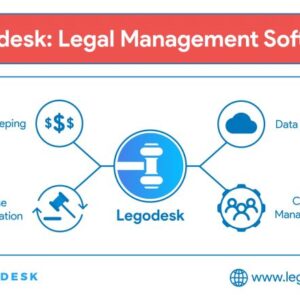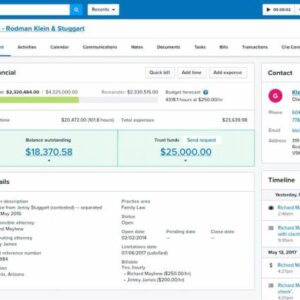
Legal project management software revolutionizes how law firms operate, moving beyond simple task management to encompass comprehensive case and matter management. These specialized tools offer features tailored to the unique demands of legal practice, providing functionalities not found in general project management solutions. This exploration delves into the core functionalities, benefits, implementation strategies, and future trends shaping this critical area of legal technology.
From time tracking and billing to seamless document management and integrated communication, legal project management software enhances efficiency, reduces costs, and improves client satisfaction. The software’s ability to handle complex litigation, manage deadlines, and generate insightful reports provides law firms with a significant competitive advantage in today’s demanding legal environment. We will examine how different types of law firms can leverage these tools to optimize their processes and achieve better outcomes.
Defining Legal Project Management Software
Legal project management software is designed to streamline and optimize the workflow within law firms and legal departments. It leverages technology to manage the complexities inherent in legal cases, from initial client intake to final judgment. This specialized software goes beyond basic task management, offering features specifically tailored to the unique needs and challenges of legal practice.
Core functionalities typically include matter management, time tracking, billing, document management, communication tools, and reporting. These features work together to provide a comprehensive solution for managing legal projects effectively.
Differences from General Project Management Tools
Legal project management software distinguishes itself from general project management tools by incorporating features specifically designed for the legal field. General project management tools might track tasks and deadlines, but they lack the specialized functionalities crucial for legal practice, such as robust document management, secure client communication portals, and compliance features. They also often lack the intricate billing and time tracking features needed for accurate legal invoicing. Legal software integrates these essential components seamlessly.
Common Features in Leading Legal Project Management Software
Leading legal project management software packages typically include features such as: secure client portals for document sharing and communication; integrated time tracking and billing systems that automatically generate invoices; robust document management systems with version control and e-signature capabilities; matter management modules to track cases and deadlines; advanced reporting and analytics dashboards to provide insights into firm performance; and integration with other legal technologies like court filing systems and e-discovery platforms. These features collectively enhance efficiency and profitability.
Benefits of Specialized Legal Project Management Software for Law Firms
The benefits of adopting specialized legal project management software are numerous. Improved efficiency is a key advantage, allowing lawyers to focus more on legal work and less on administrative tasks. Enhanced profitability is another significant benefit, achieved through improved time tracking and billing accuracy. Better client communication, facilitated by secure portals, strengthens client relationships. Furthermore, improved risk management through better organization and compliance features helps mitigate potential legal issues. Ultimately, the software leads to a more streamlined, efficient, and profitable law firm.
Comparison of Legal Project Management Software Packages
| Feature | Software A (Example) | Software B (Example) | Software C (Example) |
|---|---|---|---|
| Matter Management | Comprehensive, customizable | Basic matter tracking | Advanced features, including workflow automation |
| Time Tracking & Billing | Integrated, detailed reporting | Basic time tracking, separate billing system | Robust time tracking with various billing models |
| Document Management | Secure storage, version control | Limited storage, no version control | Advanced features, including e-signatures and redaction |
| Client Communication | Secure client portal | Email integration only | Secure portal with communication tracking |
| Pricing | $X per user/month | $Y per user/month | $Z per user/month |
| User Reviews | 4.5 stars (Example) | 3.8 stars (Example) | 4.2 stars (Example) |
| Ease of Use | Intuitive interface | Steep learning curve | User-friendly design |
Key Features and Benefits
Effective legal project management software offers a suite of features designed to streamline workflows, improve efficiency, and enhance the overall management of legal projects. These features extend beyond basic task management, encompassing sophisticated tools for time tracking, document control, communication, and reporting. The integration of these functionalities creates a powerful platform for managing the complexities inherent in legal practice.
Time Tracking and Billing Capabilities
Legal project management software significantly enhances time tracking and billing processes. Features typically include detailed time entry options, allowing lawyers to record time spent on specific tasks, clients, and matters. This granular level of detail facilitates accurate billing and minimizes disputes. The software often integrates with existing billing systems, automating the invoice generation process and reducing administrative overhead. For example, a firm might use the software to track time spent on discovery in a specific case, automatically calculating billable hours based on pre-set rates and generating detailed invoices for clients. This automation reduces manual effort and improves the accuracy of billing, leading to better financial management for the firm.
Document Management in Legal Project Management
Secure and organized document management is crucial in legal practice. Legal project management software provides a centralized repository for all case-related documents, ensuring easy access and version control. Features often include robust search functionalities, allowing users to quickly locate specific documents. Access control features ensure confidentiality, allowing only authorized personnel to view sensitive information. Consider a complex antitrust case involving thousands of documents. The software enables efficient organization of these documents, using metadata tagging and folder structures to ensure rapid retrieval during discovery or trial preparation. This centralized system prevents the chaos and potential for lost documents inherent in traditional paper-based systems.
Integrated Communication Tools
Effective communication is paramount in legal practice. Integrated communication tools within legal project management software facilitate seamless collaboration among team members, clients, and external parties. Features might include secure messaging, shared calendars, and task assignment functionalities. For instance, a team working on a merger and acquisition might use the software’s messaging feature to discuss critical documents, share updates, and coordinate their efforts. The shared calendar ensures everyone is aware of deadlines and meetings, preventing scheduling conflicts and ensuring timely completion of tasks.
Reporting and Analytics Features
Comprehensive reporting and analytics features provide valuable insights into project performance. Legal project management software typically generates customizable reports on key metrics such as time spent, budget utilization, and task completion rates. This data allows firms to identify areas for improvement, optimize workflows, and enhance profitability. For example, a report showing that a particular type of case consistently exceeds budget might prompt a review of the firm’s processes for handling those cases. Analyzing this data can lead to cost-saving measures and improved efficiency.
Features Crucial for Managing Complex Litigation Cases
Managing complex litigation cases requires specialized features. Essential functionalities include robust case management capabilities, allowing for detailed tracking of deadlines, court appearances, and discovery requests. Integration with e-discovery platforms is also vital, streamlining the process of collecting, reviewing, and producing electronically stored information. Workflow automation features, such as automated reminders for deadlines and automated routing of documents, can significantly reduce the risk of missed deadlines and improve overall efficiency. Furthermore, features that facilitate collaboration with experts and outside counsel are also crucial for successful case management. These tools ensure that all parties involved are kept informed and coordinated throughout the litigation process.
Implementation and Integration
Successfully implementing legal project management (LPM) software requires a well-defined plan and a phased approach. This involves careful consideration of data migration, system integration, and comprehensive user training. A smooth transition minimizes disruption to the firm’s workflow and maximizes the software’s benefits.
Step-by-Step Implementation Guide
Implementing LPM software is a multi-stage process. First, a thorough needs assessment should be conducted to identify specific requirements and desired functionalities. Next, the software should be selected, considering factors such as cost, features, and scalability. Following this, a detailed implementation plan should be created, outlining timelines, responsibilities, and potential challenges. The plan should also include data migration strategies and user training schedules. After the software is installed and configured, thorough testing should be conducted to ensure functionality and identify any bugs or issues. Finally, a phased rollout to different departments or teams can be implemented, allowing for continuous feedback and adjustments. This iterative approach allows for a smoother transition and minimizes disruptions to ongoing legal work.
Integrating with Existing Systems
Integrating LPM software with existing systems, such as CRM and accounting software, is crucial for streamlining workflows and eliminating data silos. This integration typically involves using APIs (Application Programming Interfaces) to exchange data between systems. For example, client information from a CRM can be automatically imported into the LPM software, eliminating manual data entry. Similarly, time entries from the LPM software can be automatically transferred to the accounting system for billing purposes. Successful integration requires careful planning and collaboration between IT staff and software vendors to ensure seamless data flow and minimize data inconsistencies. Choosing software with robust API capabilities is essential for successful integration.
Data Migration Challenges
Migrating data from existing systems to the new LPM software presents several challenges. Data inconsistencies, such as different formats or naming conventions, can complicate the process. Data cleansing and standardization are crucial steps to ensure data accuracy and integrity. Furthermore, the volume of data can be substantial, requiring efficient migration tools and techniques to minimize downtime. Consider a firm with decades of case files stored in various formats – migrating this data requires meticulous planning and potentially the use of specialized data migration services. Proper validation after migration is also essential to verify data accuracy and completeness. The potential for data loss during migration necessitates robust backup and recovery mechanisms.
Training Legal Professionals
Effective training is essential for maximizing the adoption and utilization of LPM software. A multi-faceted training approach is recommended, combining online tutorials, instructor-led sessions, and hands-on workshops. Training should be tailored to different user roles and skill levels, focusing on practical application and addressing specific user needs. For instance, junior associates might require more basic training on core functionalities, while senior partners may need training on advanced features like reporting and analytics. Ongoing support and access to help documentation are crucial for continued user proficiency and software adoption. Regular feedback sessions can help identify areas needing further training or software improvements.
Potential Integration Issues and Solutions
Several integration issues can arise during implementation. Data format incompatibilities can lead to errors during data transfer. Solutions involve data transformation and mapping processes to align data formats. API limitations can restrict data exchange capabilities; exploring alternative integration methods or working with the software vendor to address these limitations may be necessary. Security concerns regarding data transfer between systems necessitate the implementation of robust security protocols, such as encryption and access controls. Performance issues, such as slow data transfer speeds, can be addressed by optimizing network infrastructure and implementing efficient data transfer mechanisms. Finally, lack of adequate user training can hinder adoption and utilization; addressing this requires comprehensive and tailored training programs.
Case Studies and Examples
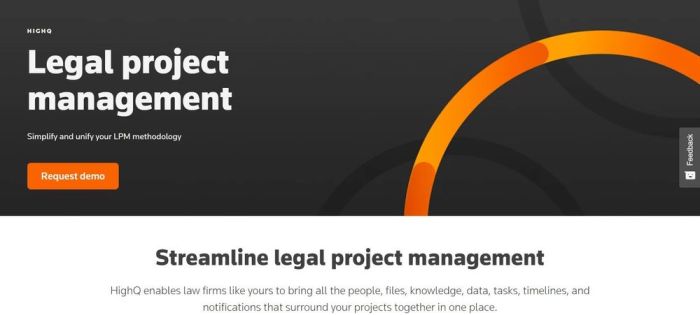
Source: weareindy.com
Legal project management software offers demonstrable improvements in efficiency, cost reduction, and client satisfaction within law firms of all sizes. The following case studies illustrate the tangible benefits realized through implementation.
Successful adoption hinges on choosing the right software and tailoring its use to the firm’s specific needs and workflows. Understanding how others have leveraged these tools can guide your own implementation strategy and inform expectations for positive outcomes.
Efficient legal project management software streamlines workflows and improves team collaboration. Understanding the technical aspects of such software is valuable, especially if you’re considering a career path like a software engineering internship , where you might contribute to building similar applications. This experience would provide valuable insights into the development processes behind these critical legal tools, enhancing your understanding of their functionality and limitations.
Improved Efficiency at Miller & Zois
Miller & Zois, a mid-sized personal injury firm, experienced a significant boost in efficiency after implementing a legal project management software. Prior to implementation, the firm relied heavily on email and spreadsheets to track cases, leading to missed deadlines, duplicated efforts, and difficulty in monitoring overall progress. The new software provided a centralized platform for managing all aspects of cases, from initial intake to final resolution. This resulted in a 25% reduction in administrative overhead and a 15% increase in billable hours within six months. The improved organization allowed associates to focus more on legal work and less on administrative tasks, leading to increased job satisfaction and reduced staff turnover. The software’s automated reporting features also provided valuable insights into caseload distribution and resource allocation, allowing for more effective management of personnel.
Cost Reduction and Enhanced Client Satisfaction at Smith & Jones
Smith & Jones, a large corporate law firm, utilized legal project management software to reduce costs and enhance client satisfaction. By automating routine tasks such as billing and document management, the firm reduced administrative expenses by 10%. The software’s robust reporting capabilities allowed for better cost tracking and forecasting, enabling the firm to accurately estimate project costs and manage budgets more effectively. Improved communication and collaboration facilitated by the software also led to enhanced client satisfaction. Clients appreciated the increased transparency and proactive communication regarding case progress, leading to stronger client relationships and referrals. The ability to quickly access all case-related documents and information also improved the firm’s responsiveness to client inquiries.
Winning a Complex Case with the Aid of Software
In a high-stakes antitrust case, the law firm of Brown & Lee successfully utilized legal project management software to manage the complexities of the litigation. The case involved a massive volume of documents, numerous witnesses, and tight deadlines. The software allowed the team to effectively manage document discovery, track expert witness testimony, and coordinate communications across multiple team members and external consultants. The centralized repository of information ensured that everyone had access to the most up-to-date information, reducing confusion and improving collaboration. The ability to track deadlines and milestones effectively prevented any missed deadlines, a critical factor in winning the case. The software’s robust reporting features also provided valuable insights into the progress of the case, allowing the firm to make informed decisions and strategize effectively. This ultimately contributed significantly to their victory.
Successful Implementation Across Different Law Firms
The following table summarizes successful implementation stories from diverse law firms, showcasing the broad applicability of legal project management software.
| Firm Size | Type of Law | Software Used | Results |
|---|---|---|---|
| Small (5-10 attorneys) | Family Law | PracticePanther | Improved case organization, reduced missed deadlines by 20% |
| Medium (20-50 attorneys) | Personal Injury | Clio Manage | Increased billable hours by 15%, reduced administrative costs by 10% |
| Large (100+ attorneys) | Corporate Law | NetDocuments | Enhanced client communication, improved document management, better cost control |
| Boutique (Specialized niche) | Intellectual Property | MyCase | Streamlined workflows, increased efficiency in patent prosecution |
Different types of law firms benefit from legal project management software in unique ways. Smaller firms often focus on improved organization and reduced administrative burden, while larger firms may prioritize cost reduction and enhanced client communication. Specialized boutique firms may find value in software that caters to their specific practice area needs, such as integrated IP management tools.
Future Trends and Developments
The legal profession is undergoing a rapid transformation, driven by technological advancements and evolving client expectations. Legal project management software is at the forefront of this change, constantly adapting to meet the demands of a more efficient and data-driven legal landscape. Understanding the future trends in this field is crucial for both legal professionals and software developers to ensure optimal utilization and continued innovation.
The convergence of several technological advancements is reshaping the capabilities and applications of legal project management software. These advancements are not merely incremental improvements but rather represent a fundamental shift in how legal work is managed and executed. This section explores the key trends, their impact, and the challenges and opportunities they present.
The Impact of Artificial Intelligence on Legal Project Management
Artificial intelligence (AI) is poised to revolutionize legal project management. AI-powered features can automate time-consuming tasks such as document review, contract analysis, and due diligence, freeing up legal professionals to focus on higher-value work. For example, AI can identify and flag potential conflicts of interest in client portfolios much faster than a human, leading to significant time savings and reduced risk. Predictive analytics, another AI application, can forecast project timelines and budgets with greater accuracy, allowing for proactive risk management and improved resource allocation. AI-driven chatbots can handle routine client inquiries, improving responsiveness and client satisfaction. However, the integration of AI also presents challenges, including data security concerns, the need for robust data governance, and the potential for algorithmic bias. Addressing these challenges is crucial to ensuring the ethical and effective implementation of AI in legal project management.
Innovative Features in Future Legal Project Management Software
Several innovative features are likely to become standard in future versions of legal project management software. These include advanced predictive analytics capabilities providing more accurate project forecasting and risk assessment, enhanced collaboration tools facilitating seamless teamwork across geographical locations and time zones, and improved integration with other legal technologies, such as e-discovery platforms and document automation tools. Blockchain technology could also play a role, enhancing security and transparency in document management and contract execution. For instance, imagine a system where all project documents are securely stored and tracked on a blockchain, ensuring their authenticity and preventing unauthorized alterations. This level of transparency and security could significantly improve trust and efficiency in legal collaborations.
Challenges and Opportunities Presented by Technological Advancements, Legal project management software
The adoption of new technologies presents both challenges and opportunities. One significant challenge is the need for comprehensive training and support for legal professionals to effectively utilize the new features and functionalities of advanced legal project management software. Another challenge lies in ensuring data security and privacy, especially with the increasing use of AI and cloud-based solutions. However, the opportunities are substantial. Improved efficiency, reduced costs, enhanced client service, and a more data-driven approach to legal practice are just some of the benefits that can be realized. The ability to leverage data analytics to identify trends and improve project management strategies represents a significant opportunity for law firms to gain a competitive advantage. For example, analyzing historical project data can reveal patterns and insights that inform better resource allocation and risk mitigation in future projects.
Evolution of Legal Project Management Software to Meet Changing Needs
Legal project management software will need to evolve to accommodate the changing needs of the legal profession. This includes adapting to new legal regulations, integrating with emerging technologies, and providing more personalized and customized solutions to meet the specific needs of different law firms and legal departments. The software will need to be more user-friendly and intuitive, with a focus on providing clear and actionable insights to legal professionals. Furthermore, the increasing demand for greater transparency and accountability in legal services will necessitate the development of software that facilitates better tracking and reporting of project progress and costs. For instance, a future version might incorporate features that automatically generate detailed reports on project performance, including key metrics such as time spent on tasks, budget adherence, and client satisfaction. This data can be used to identify areas for improvement and optimize project management processes.
End of Discussion
Ultimately, the adoption of legal project management software represents a crucial step towards modernizing legal practice. By streamlining workflows, enhancing collaboration, and providing valuable data-driven insights, these tools empower law firms to operate more efficiently, improve client service, and ultimately, achieve greater success. The ongoing evolution of legal technology promises even more sophisticated solutions in the future, further transforming the legal landscape.