
How to save your home from a wildfire? It’s a question burning brighter than the flames themselves, especially as wildfires become more frequent and intense. This isn’t just about protecting bricks and mortar; it’s about safeguarding memories, irreplaceable belongings, and ultimately, your life. We’re diving deep into the practical steps, from creating a defensible space around your home to crafting an airtight evacuation plan. Get ready to transform your property into a fortress against the inferno.
This guide breaks down the process into manageable steps, covering everything from pre-fire preparations like clearing flammable vegetation and installing fire-resistant materials, to crucial actions during a wildfire, such as securing your home and evacuating safely. We’ll even cover the post-fire recovery phase, helping you navigate the complex process of assessing damage, cleaning up debris, and rebuilding your life. Because facing a wildfire head-on requires preparedness, knowledge, and a dash of grit.
Preparing Your Home for a Wildfire
Protecting your home from wildfire isn’t just about luck; it’s about proactive preparation. Creating a defensible space and implementing home hardening measures significantly increases your chances of survival and minimizing damage. Think of it as building a fortress around your most valuable asset.
Defensible Space: Your Home’s First Line of Defense
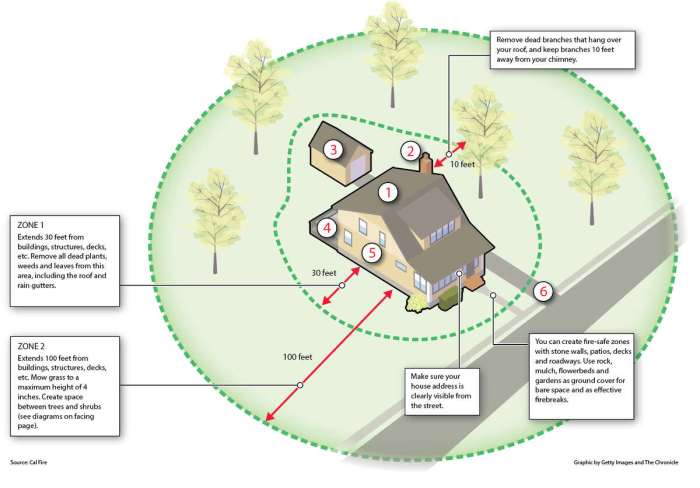
A defensible space is the area around your home that you actively manage to reduce the risk of wildfire ignition and spread. It’s a buffer zone, a firebreak that gives firefighters a better chance to protect your property. The size and specific requirements of your defensible space will depend on your local fire risk and vegetation, but generally, it’s divided into two zones: immediate and extended.
Creating a Defensible Space: A Step-by-Step Guide
The immediate zone, extending 0-30 feet from your home, requires the most meticulous attention. Remove all flammable materials – dry leaves, pine needles, mulch, and even overhanging tree branches. Keep grass trimmed short (under 4 inches) and consider replacing flammable landscaping with fire-resistant plants like succulents or drought-tolerant shrubs. The extended zone, stretching from 30 to 100 feet, needs less intensive work but still requires clearing away dense vegetation and creating horizontal and vertical space between plants. This reduces the fuel load and slows down fire progression. Think of it as thinning out the forest around your home. Regular maintenance is key – a one-time effort isn’t enough. Seasonal changes can significantly impact flammability.
Home Hardening: Fortifying Your Structure
Home hardening involves making structural modifications to improve your home’s resistance to wildfire damage. This isn’t about making it fireproof, but rather about slowing the spread of flames and giving firefighters more time to act. Consider installing fire-resistant roofing materials (like class A rated asphalt shingles or metal roofing), replacing wooden decks with concrete or composite alternatives, and ensuring that your vents are protected with mesh screens. These measures significantly reduce the chances of embers igniting your home. Regular maintenance, such as cleaning gutters and ensuring that vents are clear, is also critical.
Sample Plan for Clearing Flammable Materials
Prioritizing the removal of flammable materials is crucial. Start with the immediate zone around your home, focusing on dry leaves, brush, and debris directly adjacent to the structure. Next, tackle any dead or overhanging branches that could easily catch fire. Then, move to the extended zone, focusing on thinning out shrubs and trees to create space and reduce fuel load. Remember to check for any flammable materials stored near your home, such as firewood or propane tanks, and move them to a safer location, far from structures. A well-organized approach will make the process more efficient and less overwhelming.
Defensible Space Creation: A Detailed Plan
| Task | Materials Needed | Time Estimate | Safety Precautions |
|---|---|---|---|
| Clear immediate zone (0-30 feet) of all flammable materials | Rakes, shovels, wheelbarrow, safety glasses, work gloves | 4-8 hours (depending on size of area) | Wear appropriate clothing and eye protection. Stay hydrated. Take breaks in the shade. |
| Trim grass to under 4 inches | Lawnmower, safety glasses, ear protection | 2-4 hours | Be aware of surroundings, avoid working when fatigued. |
| Remove dead or overhanging branches | Chainsaw (if necessary), safety gear (helmet, eye protection, chaps), ladder | Variable (depending on tree size and number) | Use caution when using power tools. Ensure proper safety gear is used. Consider professional help for large trees. |
| Thin vegetation in extended zone (30-100 feet) | Loppers, hand saws, rakes | 8-24 hours (depending on area size and density) | Use caution when handling sharp tools. Be mindful of potential hazards like uneven terrain. |
Protecting Your Home During a Wildfire
When a wildfire threatens, preparing your home becomes crucial. Swift action before evacuating can significantly increase your chances of saving your property and precious memories. This isn’t about panic; it’s about proactive defense. Let’s look at the steps you can take to protect your home during a wildfire.
Securing Your Home Before Evacuation
Before you leave, take decisive steps to minimize the wildfire’s impact. This involves more than just grabbing your essentials; it’s about actively preparing your house to withstand the flames. Think of it as creating a defensive perimeter for your home.
- Close all windows and doors tightly. This helps prevent embers from entering and reduces the airflow that could fuel a fire.
- Turn off all gas appliances, including your stove, oven, and water heater. This prevents gas leaks that could ignite.
- Disconnect propane tanks from any grills or other appliances. A disconnected tank is much safer than one connected and potentially exposed to heat.
Protecting the Home’s Exterior from Embers
Embers are a major cause of wildfire damage. These tiny, burning particles can travel great distances and ignite easily. Protecting your home’s exterior is paramount.
- Cover all vents and windows with fire-resistant materials. Metal mesh screens are effective, as are commercially available fire-resistant covers. Think of this as creating a shield against flying embers.
- Remove any flammable materials near your house. This includes dry leaves, wood piles, and overhanging branches. Creating a defensible space around your home is crucial. Imagine a 30-foot radius around your home cleared of flammable materials; this significantly reduces the risk.
- Move any flammable furniture or items away from the house. This includes patio furniture, outdoor cushions, and anything that could easily catch fire.
Protecting Valuable Documents and Irreplaceable Possessions
While saving your home is the priority, protecting irreplaceable items is equally vital. Planning ahead makes this less stressful during an emergency.
- Gather essential documents like passports, insurance policies, and birth certificates. Consider scanning these and storing them digitally in the cloud for easy access. A fire-resistant safe is also a good option for physical copies.
- Identify and secure irreplaceable possessions such as family photos, heirlooms, and valuable jewelry. Pack these securely and transport them with you during evacuation.
- Take photos or videos of your possessions as proof of ownership for insurance purposes. This documentation can be invaluable in the aftermath of a wildfire.
Vulnerable Areas and Mitigation Strategies
Certain areas of your home are more vulnerable to wildfire damage than others. Understanding these vulnerabilities and implementing mitigation strategies is key.
- Attics and Roofs: These are often entry points for embers. Ensure your attic is well-ventilated and that your roof is made of fire-resistant materials. Regular cleaning of debris from the roof and gutters is vital.
- Decks and Patios: Wooden decks and patios are highly flammable. Consider using fire-resistant materials or keeping them clear of flammable items. The space under the deck should also be kept clean and free of combustible materials.
- Windows and Doors: These are weak points in your home’s defense. Use fire-resistant curtains or shutters, and ensure a tight seal around windows and doors to prevent embers from entering.
Emergency Evacuation Plan
Having a well-defined evacuation plan is not just about reacting to a wildfire; it’s about proactive preparedness. This plan should be practiced regularly to ensure everyone knows what to do.
- Assemble an emergency kit: This should include water, non-perishable food, medications, flashlights, a first-aid kit, and important documents. Consider the needs of all family members, including pets.
- Designate a meeting place: Choose a location outside your immediate neighborhood where everyone can gather safely if separated during the evacuation.
- Establish communication protocols: Determine how family members will communicate during the evacuation, particularly if cell service is disrupted. Having a designated out-of-area contact can be helpful.
- Plan multiple escape routes: Identify several routes out of your neighborhood in case one is blocked by fire or traffic. Know the locations of nearby evacuation centers.
Post-Wildfire Actions
Source: hdnux.com
The aftermath of a wildfire can be devastating, both emotionally and physically. Taking swift and decisive action in the days and weeks following a fire is crucial for your safety, your property, and your long-term recovery. This section Artikels the essential steps to take to navigate this challenging period.
Assessing Damage and Contacting Insurance
After ensuring your safety and the safety of your family, the first priority is to assess the extent of the damage to your property. This involves a careful, but cautious, inspection of your home and belongings. Document everything with photos and videos, noting specific damage to the structure, contents, and any injuries sustained. Contact your insurance company immediately to report the damage and begin the claims process. Keep detailed records of all communication and interactions. Having a pre-existing home inventory can greatly expedite this process. For example, a detailed list with photos of your possessions can significantly streamline the claims process with your insurer.
Safely Re-Entering Your Home After a Wildfire
Returning to your home after a wildfire requires extreme caution. Before entering, contact local authorities to ensure it’s safe to do so. Many hazards remain even after the flames are extinguished, including unstable structures, downed power lines, and hazardous materials. If you suspect structural damage, contact a qualified structural engineer before entering. Wear appropriate protective gear, including sturdy shoes, gloves, and a respirator mask to filter out potentially harmful airborne particles like ash and debris. Check for gas leaks and electrical hazards before entering the building.
Cleaning Up Debris and Disposing of Hazardous Materials
Cleaning up after a wildfire involves dealing with significant amounts of debris, much of which may be hazardous. This includes handling ash, damaged building materials, and potentially contaminated soil. Sort debris into separate piles: non-hazardous (wood, etc.) and hazardous (asbestos, chemicals, etc.). Local authorities will often provide guidance on debris removal and disposal of hazardous materials. Never attempt to handle hazardous materials without proper training and equipment. For instance, asbestos removal requires specialized expertise and protective gear, and improper handling can lead to serious health consequences. Follow all local guidelines regarding disposal.
Repairing or Rebuilding Your Home
Repairing or rebuilding a home after a wildfire is a complex undertaking. Begin by contacting contractors and architects experienced in wildfire damage restoration. Insurance claims will play a significant role in funding the reconstruction process. Be sure to obtain multiple quotes and thoroughly vet any contractors before committing to a project. The process may involve navigating building codes, permits, and insurance adjusters, so patience and thorough documentation are key. For example, securing building permits can be time-consuming, but necessary for compliance and insurance coverage.
Obtaining Assistance After a Wildfire, How to save your home from a wildfire
Numerous resources are available to help wildfire survivors. Federal, state, and local governments often offer financial assistance, grants, and low-interest loans for rebuilding and recovery. The Federal Emergency Management Agency (FEMA) is a primary source of such aid. Additionally, many non-profit organizations and community groups provide support services, including temporary housing, food, and counseling. Reach out to your local community center or government agencies to learn about available programs and assistance opportunities. For instance, the Red Cross often provides immediate disaster relief, including temporary shelter and food.
Understanding Wildfire Behavior
Source: rocketcdn.me
Wildfires are terrifying, so prepping your home is key. Clear defensible space around your house, and keep an emergency kit ready – including a first-aid kit, of course, because you’ll need to monitor your stress levels (check out this guide on best heart rate monitors to stay on top of it!). Knowing your heart rate during a stressful evacuation can help you manage the situation, and remember to have a go-bag ready with essential documents and supplies.
Wildfires are complex and dynamic events, their behavior influenced by a delicate interplay of factors. Understanding these factors is crucial for effective prevention and mitigation strategies. Ignoring these elements can lead to disastrous consequences, turning a manageable situation into a catastrophic loss.
Wildfire spread is governed by a simple yet powerful concept: the fire triangle. This illustrates the three essential components needed for combustion: heat, fuel, and oxygen. Understanding how these interact is key to preventing and controlling wildfires.
Factors Influencing Wildfire Spread
Wind, fuel, and topography are the primary drivers of wildfire spread. Strong winds act like bellows, fanning flames and rapidly accelerating fire progression. The type and amount of fuel available – everything from dry grass to dense forests – significantly impacts the intensity and speed of the fire. Steep slopes allow fires to climb rapidly, while canyons can create powerful wind currents that funnel flames and accelerate spread. For instance, the devastating 2018 Camp Fire in California was fueled by strong winds pushing the fire through dry vegetation up steep hillsides.
Wildfire Types and Characteristics
Wildfires are broadly categorized based on their behavior and the type of fuel they consume. Ground fires burn slowly along the surface, often smoldering in leaf litter and peat. Surface fires spread more rapidly through grasses and shrubs, consuming the underbrush. Crown fires, the most destructive type, leap from treetop to treetop, driven by strong winds and abundant fuel in the forest canopy. The 2020 Australian bushfires, for example, included a significant number of crown fires fueled by exceptionally dry conditions and strong winds.
Weather Conditions and Wildfire Behavior
Weather plays a pivotal role in wildfire behavior. High temperatures, low humidity, and strong winds create ideal conditions for rapid fire spread. Rainfall, conversely, can suppress fire activity, although extremely dry conditions following a period of rain can increase fuel flammability. The Santa Ana winds in Southern California, known for their high speed and dryness, are infamous for exacerbating wildfires. A specific example would be the devastating Thomas Fire in 2017, which was heavily influenced by these strong, dry winds.
Interpreting Wildfire Behavior Predictions and Warnings
Meteorological agencies and fire departments utilize sophisticated models to predict wildfire behavior. These predictions consider factors such as fuel type, topography, weather patterns, and historical fire data. Warnings are issued based on these predictions, often categorized by severity level. Understanding these warnings and evacuation orders is critical for personal safety and property protection. For example, the National Weather Service provides Red Flag Warnings indicating a high risk of wildfire ignition and rapid spread due to critical fire weather conditions.
The Fire Triangle
Imagine a triangle. Each corner represents one element of the fire triangle: heat, fuel, and oxygen. Removing any one of these corners breaks the triangle, extinguishing the fire. Heat can be removed by applying water or other cooling agents. Fuel can be removed by clearing vegetation or creating firebreaks. Oxygen can be reduced by smothering the flames with a blanket or soil. Understanding this principle is fundamental to both wildfire prevention and suppression efforts.
Community Preparedness: How To Save Your Home From A Wildfire
Wildfires don’t discriminate; they threaten entire communities, not just individual homes. A strong community response is crucial for effective wildfire prevention and survival. Collective action, fueled by preparedness and mutual support, significantly increases the chances of minimizing damage and ensuring everyone’s safety. This section explores the vital role of community preparedness in facing the wildfire threat.
Community Wildfire Preparedness Plans: Their Importance
Community wildfire preparedness plans are essentially blueprints for survival. They Artikel proactive steps, emergency procedures, and communication strategies that coordinate the efforts of residents, local authorities, and emergency services. These plans aren’t just theoretical documents; they’re lifelines during a crisis, guiding actions and minimizing chaos. A well-defined plan designates evacuation routes, identifies safe zones, and establishes communication channels, ensuring a coordinated and efficient response. For instance, a community might create a map highlighting defensible spaces and outlining alternative escape routes in case primary roads become impassable.
The Role of Local Fire Departments and Other Emergency Services During a Wildfire
Local fire departments and other emergency services form the backbone of wildfire response. Their expertise in firefighting, search and rescue, and emergency medical services is essential for containing the fire, rescuing trapped individuals, and providing immediate post-fire support. These agencies typically lead the community preparedness efforts, conducting training sessions, conducting risk assessments, and distributing educational materials. Their knowledge of local terrain and the specific wildfire risks facing the community is invaluable. For example, during a wildfire, the fire department would coordinate evacuations, deploy firefighting resources strategically, and work with other agencies to ensure the safety and well-being of residents.
Participating in Community Wildfire Mitigation Efforts
Active participation in community wildfire mitigation is a shared responsibility. This involves various actions, from creating defensible spaces around homes to participating in community-organized fuel reduction projects. Residents can join neighborhood firewise committees, volunteering their time and skills to assess risks, plan mitigation strategies, and implement preventative measures. Examples include participating in organized brush clearing events or attending workshops on creating defensible spaces. Community involvement ensures that mitigation efforts are comprehensive and address the specific vulnerabilities of the area.
Resources and Programs Available to Communities for Wildfire Prevention and Preparedness
Numerous resources and programs are available to support community wildfire prevention and preparedness. Federal, state, and local agencies often offer grants, technical assistance, and educational materials. Organizations like the National Fire Protection Association (NFPA) provide valuable information and resources on wildfire safety and mitigation strategies. These resources can help communities develop comprehensive preparedness plans, secure funding for mitigation projects, and educate residents on wildfire risks and safety procedures. For example, the Federal Emergency Management Agency (FEMA) offers grants to communities for wildfire mitigation projects, such as fuel reduction and defensible space creation.
Building a Strong Community Network for Wildfire Support
A strong community network is crucial for supporting each other during and after a wildfire. This involves building relationships with neighbors, establishing communication channels, and identifying individuals with specific skills or resources that can be helpful during a crisis. Regular community meetings, neighborhood watch programs, and social gatherings can foster a sense of community and improve coordination during emergencies. For instance, a well-established network can help facilitate mutual aid, share resources, and provide emotional support in the aftermath of a wildfire.
Summary
Source: lloydsadd.com
Saving your home from a wildfire isn’t a one-size-fits-all solution; it’s a proactive, multi-faceted approach that demands planning and action. From strategically landscaping your property to understanding wildfire behavior and participating in community preparedness initiatives, every step counts. Remember, being prepared isn’t just about protecting your home—it’s about protecting yourself and your loved ones. This isn’t just about surviving a wildfire; it’s about thriving afterwards. So, arm yourself with knowledge, build your resilience, and let’s face the flames together.
